
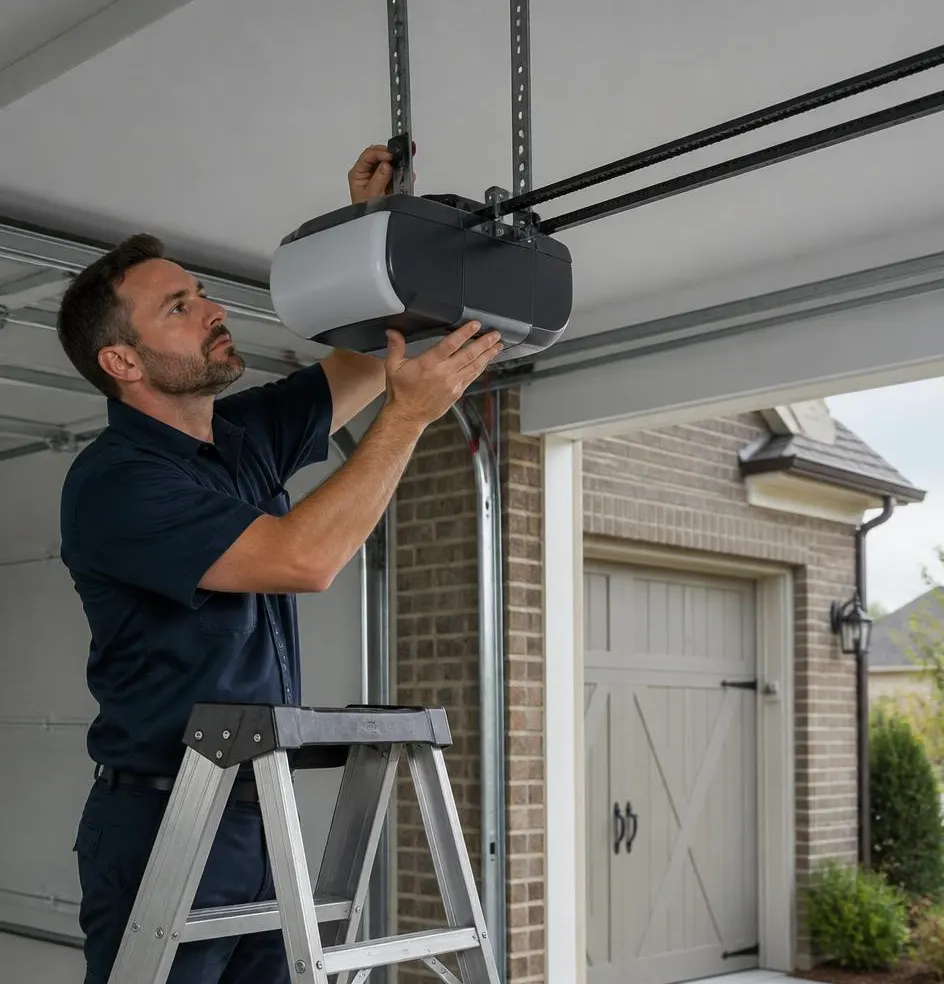
The short answer: most garage door noise comes from loose hardware, dry rollers, or an aging chain-drive opener, and you can fix the first two yourself in under an hour. If the noise persists after that, the fix usually involves parts or adjustments best left to a technician.
Why Garage Door Openers Get Loud
A garage door opener is a system of moving metal parts bolted to your ceiling, and that system takes a beating from Morton Grove's weather. Cold winters cause metal brackets and fasteners to contract, which loosens bolts over time. Humid summers wash out lubricant faster than you'd expect. Add daily use and the vibration that travels straight into your rafters, and a quiet opener slowly turns into a grinding, rattling one.
Tools You'll Need
- Ratchet or socket set (and a 10mm wrench)
- Silicone-based garage door lubricant (not WD-40 or household oil)
- Clean rags
- Sturdy ladder
- Work gloves and safety glasses
Step-by-Step: Quieting Your Opener
- Tighten every bolt you can reach. Check the mounting brackets on the track, the hinges between door panels, and the bolts holding the opener motor to the ceiling bracket. Vibration loosens these constantly, especially after a hard freeze-thaw cycle.
- Lubricate the moving parts. Apply silicone lubricant to the rollers, hinges, and the track itself. Wipe off excess so it doesn't attract grit from winter road salt that gets tracked into the garage.
- Inspect the rollers. If they're metal and original to the door, they're often the loudest part of the system. Look for flat spots, rust, or wobble. Worn rollers should be replaced with nylon ones, which run noticeably quieter.
- Add vibration isolation. A rubber isolation kit between the opener motor and the ceiling bracket absorbs a surprising amount of the rattle that travels through drywall into living spaces above the garage.
- Check chain tension. If you have a chain-drive opener, a chain that's too loose will slap against the rail with every open and close. Most openers have an adjustment bolt near the motor head for this.
- Listen for the source. Run the door and pay attention to whether the noise comes from the track, the springs, or the motor unit itself. That tells you whether you're dealing with hardware, lubrication, or a mechanical problem inside the opener.
When a Belt-Drive Swap Makes Sense
If you've tightened, lubricated, and replaced rollers and the opener is still loud, the chain-drive mechanism itself may simply be past its prime. Chain drives are reliable but inherently noisier than belt drives, which use a reinforced rubber belt instead of metal links. Swapping to a belt-drive opener is a bigger project involving the motor head, drive rail, and wiring, and it's worth considering if your opener is older, due for replacement anyway, or installed near a bedroom where noise actually matters day to day.
What You Can Do vs. What Needs a Technician
Homeowners can safely handle tightening hardware, lubricating tracks and hinges, cleaning off road salt residue, and swapping worn rollers. What you shouldn't attempt: anything involving the torsion springs, adjusting chain or belt tension beyond a minor tweak, replacing the motor's internal gears, or converting a chain-drive system to a belt drive. These involve stored spring tension or electrical work that can cause real injury if something slips.
When to Call Morton Grove Garage Door
If you've gone through the checklist and the grinding, banging, or squealing hasn't improved, it's time for a technician. Our Garage Door Maintenance visits include a full inspection of hardware, rollers, and lubrication points, and if the opener itself is the problem, we handle Garage Door Opener Repair & Installation, including belt-drive conversions for homeowners who are done living with a loud motor overhead.
If your opener in Morton Grove, IL is driving everyone in the house a little crazy, give us a call and we'll quiet it down for good.