
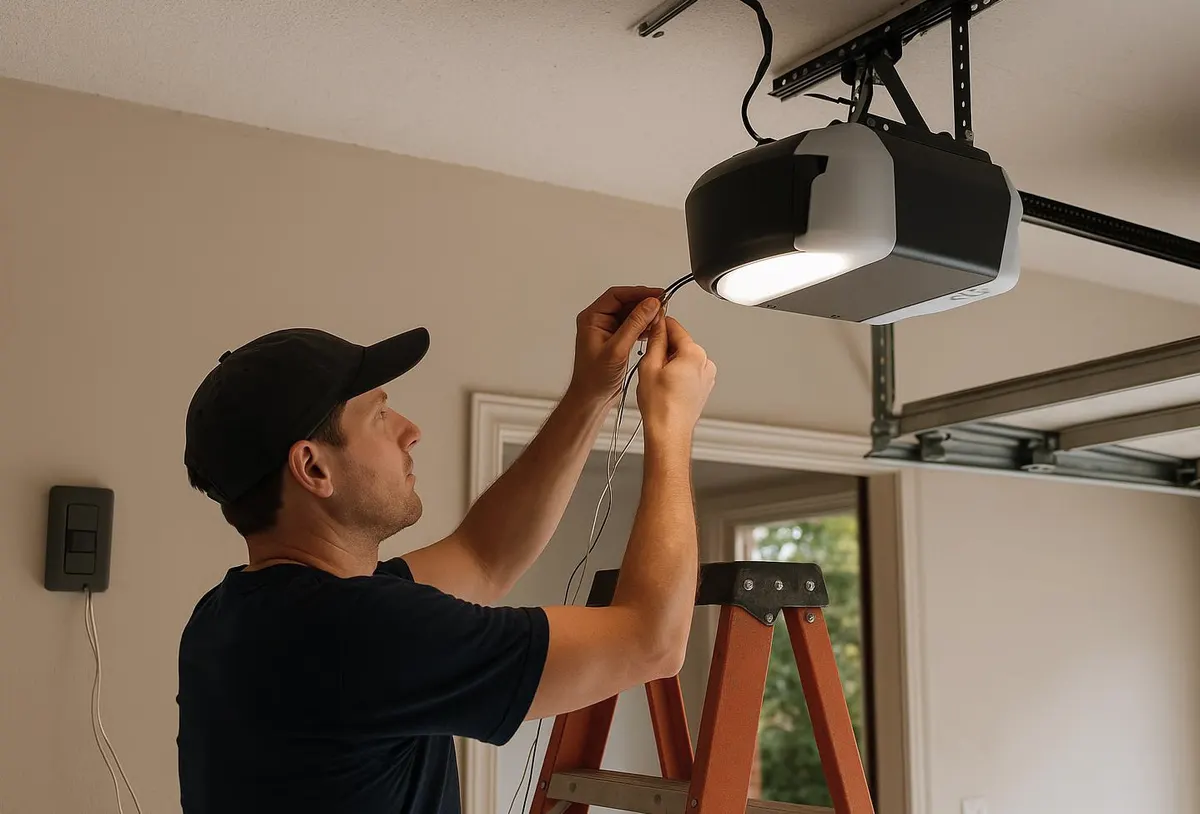
The opener stops responding, and the first instinct is to reach up and yank the red emergency release cord. It feels like the obvious fix: the cord is right there, it's labeled "emergency," and pulling it seems like the fastest way to get the car out before work or an appointment. The problem is that the cord doesn't fix anything. It simply disconnects the door from the opener's trolley, handing you full control of a door that may weigh over 150 pounds and is normally held in place by spring tension you can't see or judge from the floor.
What the Cord Is Actually For
The emergency release is meant for exactly two situations: a power outage when you need to open or close the door by hand, or an opener malfunction where the door itself is in good working order and properly balanced. Pulling the cord in either of those cases disengages the trolley so you can lift and lower the door manually, the same way doors worked before automatic openers existed.
It is not meant to be a workaround for a door that's acting up because of a bad sensor, a worn spring, or ice in the track. Using it that way doesn't solve the underlying problem, it just removes the one safety mechanism, the opener's controlled motor, that was keeping a struggling door from moving unpredictably.
What Goes Wrong, and How Badly
Garage doors are counterbalanced by torsion or extension springs under heavy tension. When that balance is off, which happens gradually as springs age, metal fatigues, or cables fray, pulling the release cord removes the only thing keeping the door from acting on that imbalance.
- Sudden drop: If a spring is already weakened or broken, releasing the trolley while the door is up can let it fall without warning. A free-falling door can crush fingers, damage a parked vehicle, or injure anyone standing underneath.
- Stuck mid-track: An unbalanced door may not stay where you leave it. It can creep down on its own and lodge partway in the track, which is both a nuisance and a sign the springs need attention before anyone operates the door again.
- Cold-weather surprises: During Morton Grove winters, ice buildup in the tracks or stiffening in cold-contracted hardware can mask how out of balance a door really is. A door that seems to move fine in September can behave very differently once temperatures drop and metal parts are reacting to cold and road salt spray.
- Leaving it disengaged: Some homeowners pull the cord, deal with the immediate issue, and forget to reconnect the trolley. The opener will run its motor with nothing attached, giving a false sense that the door is working automatically when it isn't moving at all.
The Actions That Keep It Safe
- Test balance with the door closed. Pull the release cord only when the door is fully down, then lift it manually to about waist height and let go. A properly balanced door stays in place. If it drifts down or jumps up, the springs need service before you rely on manual operation again.
- Never release the cord with the door standing open unless someone is physically supporting the weight. That's the scenario where an unnoticed spring problem turns into a fast, heavy drop.
- Reconnect after every use. Pull the cord again (or follow the reconnect motion toward the door) to re-engage the trolley once power is restored or the repair is done, so the opener and door are working together again.
- Check the track and hardware before winter. A quick look for ice, debris, or heavy corrosion on cables and spring coils in the fall catches problems before cold weather makes them worse.
- Save it for real emergencies. Power outages during spring storms are a legitimate reason to use the release and operate the door by hand. A door that's merely acting slow or noisy is a repair issue, not a reason to disconnect the opener.
When to Call Morton Grove Garage Door
If a manual balance test shows the door sliding or jumping instead of holding steady, or if the door has already dropped suddenly after the cord was pulled, stop using it by hand and call us. That kind of imbalance almost always points to worn or broken springs, and our Spring Replacement service addresses it directly, including checking cables and hardware that take the same strain. If you're not sure whether the issue is the springs, the opener, or something else, our Garage Door Maintenance visit includes a full balance and safety inspection so you know exactly what's going on before winter ice and salt add more wear to the system.
If your garage door in Morton Grove, IL isn't holding its position or you're dealing with a stuck emergency release, give Morton Grove Garage Door a call. We'll get it diagnosed, repaired, and balanced before the cold weather makes small problems bigger.